A General-Purpose Async Loading Component for React Query

One way to centralise loading, error, and retry UI for React Query without leaking query state into every component.
Async handlingError handling
Reusable ways of building — portable enough that another team could adopt them unchanged. Each one is published to my Blint registry, where the pattern is the thing a coding agent actually reads and checks a codebase against. These pages are generated from it, so the registry copy is always the real one.
One way to centralise loading, error, and retry UI for React Query without leaking query state into every component.

Embedding markdown documentation directly in your app and letting Claude maintain it produces docs that stay accurate, include real diagrams, and don't rot.

A clean pattern for swapping between real and mock APIs without polluting your components with mocking logic.
Honour client-generated IDs when upserting entities — look up by ID, never mutate a loaded row's primary key, and replace rather than re-key when a natural key collides.

A pattern for shared, runtime-validated data models that catch issues early and keep frontend and backend in sync.

Building components in isolation with comprehensive demos catches edge cases that unit tests miss and ensures your UI handles failure gracefully.
A testing strategy that mirrors how you build UIs — composable, isolated, and resilient to change.
The repeatable skeleton for a multi-window Electron + Vite + React app — three builds, a locked-down preload bridge, domain-scoped IPC, and the boot-time pitfalls that produce blank windows.
GitHub Actions CI/CD for building, signing, distributing, and auto-updating an Electron app via S3/CloudFront
Drill into or edit an existing entity in a URL-driven detail panel; reserve dialogs for disposable create/confirm/wizard flows.

Fail fast with explicit values. No defaults, no fallbacks, no computed configuration.
Job-processing lambdas return success when execution completes normally; the job's outcome travels in the response payload, not as a thrown error.
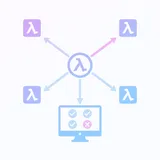
Tips for making lambdas easier to debug and maintain.
Client writes commit to the local store and return; a background drainer delivers them to the server.

Treat LocalStack as disposable infrastructure. Destroy the container on every deploy and avoid partial teardowns.
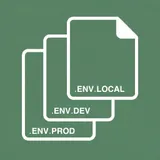
As the number of apps, services and environments grow over time, these tips keep your environment configurations files more manageable
Use React Query's request deduplication and cache invalidation to eliminate shared state — components fetch independently and stay in sync through query invalidation, not props or context.
Pitfalls and patterns for SceneKit rendering — render thread vs MainActor, constraint closures and actor isolation, scene-clock gating, and bone manipulation.

A lightweight event tracking system built on DynamoDB that provides visibility across your services without the cost or complexity of third-party logging platforms.
Value-route every flow on a path-bound NavigationStack — an active view-destination link re-asserts its push whenever the path changes